
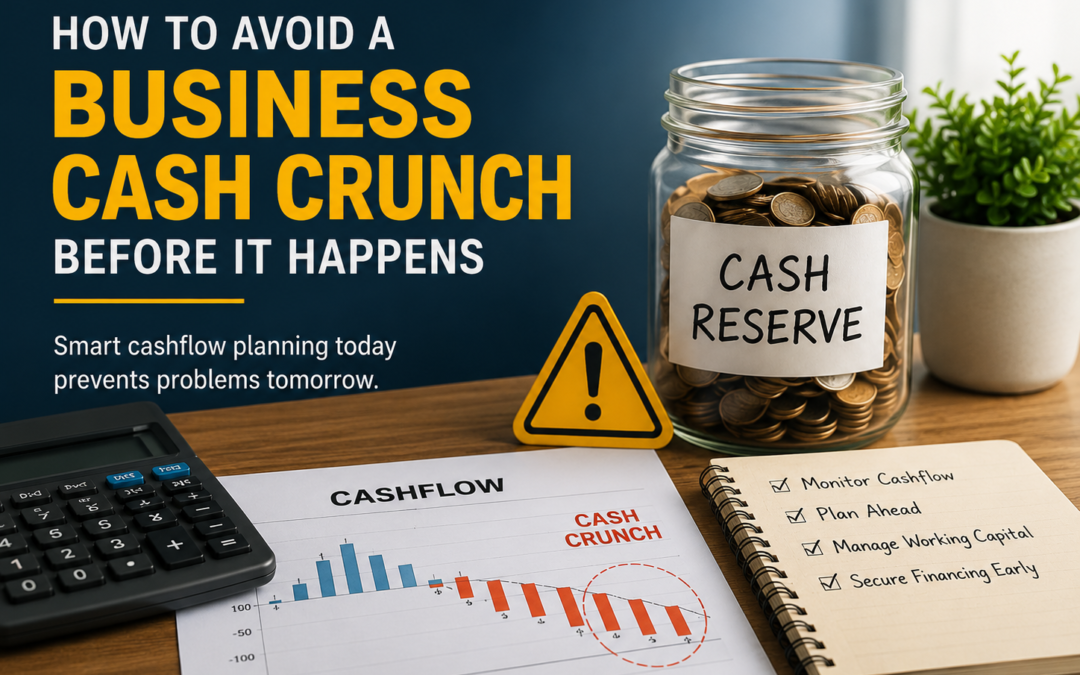
Many SME owners assume that as long as sales are growing, the business is financially healthy. However, a business cash crunch can happen even when revenue looks strong on paper.
In reality, cashflow timing is often more important than profit. Businesses may still face financial pressure when expenses need to be paid before customer payments are collected. Understanding how a cash crunch develops is the first step to preventing it.
What Causes a Business Cash Crunch
This usually happens when outgoing cash moves faster than incoming cash.
Common causes include:
- Customers taking longer to pay
- Large inventory purchases
- Rising payroll and rental costs
- Expansion without sufficient working capital
For example, suppliers may require payment upfront while customers only pay after 30 to 90 days. During periods of growth, this gap becomes larger because businesses need more cash to support higher operating activity.
Many SMEs only realise the problem when bank balances become critically low.
Why Profitable Businesses Still Face Cashflow Problems
One of the biggest misconceptions among SME owners is assuming profit equals cashflow.
A business can be profitable while still facing a cash crunch because:
- Revenue has not been collected yet
- Cash is tied up in inventory
- Existing debt repayments are too high
This is especially common in industries with long receivable cycles such as construction, trading, and manufacturing.
Without proper cashflow planning, businesses may struggle to fund daily operations despite having strong sales.
How to Prevent a Business Cash Crunch
Preventing a cash crunch requires proactive financial planning instead of reactive borrowing.
SME owners should:
- Monitor cashflow weekly, not just monthly
- Track customer payment cycles closely
- Maintain sufficient working capital buffer
- Avoid over-expansion without financing support
Financing should ideally be arranged before cashflow becomes tight. Businesses that apply early usually have stronger approval chances and more financing options available.
The Importance of Financing Readiness
Many SMEs only seek financing after a crisis has already started. At that stage, lenders may observe:
- Declining account balances
- Delayed repayments
- Over-utilised facilities
This reduces flexibility and financing options.
Avoiding a business cash crunch means preparing financing while the business is still financially stable, not when survival becomes the priority.
Final Thoughts
A cash crunch rarely happens overnight. It usually builds gradually through poor cashflow timing, delayed collections, and insufficient working capital planning.
Businesses that monitor cashflow closely and prepare financing early are far more resilient during periods of growth or market uncertainty.
At CapitalGuru, we help SME owners identify financing gaps early and structure financing solutions that support sustainable business growth before cashflow problems become critical.