
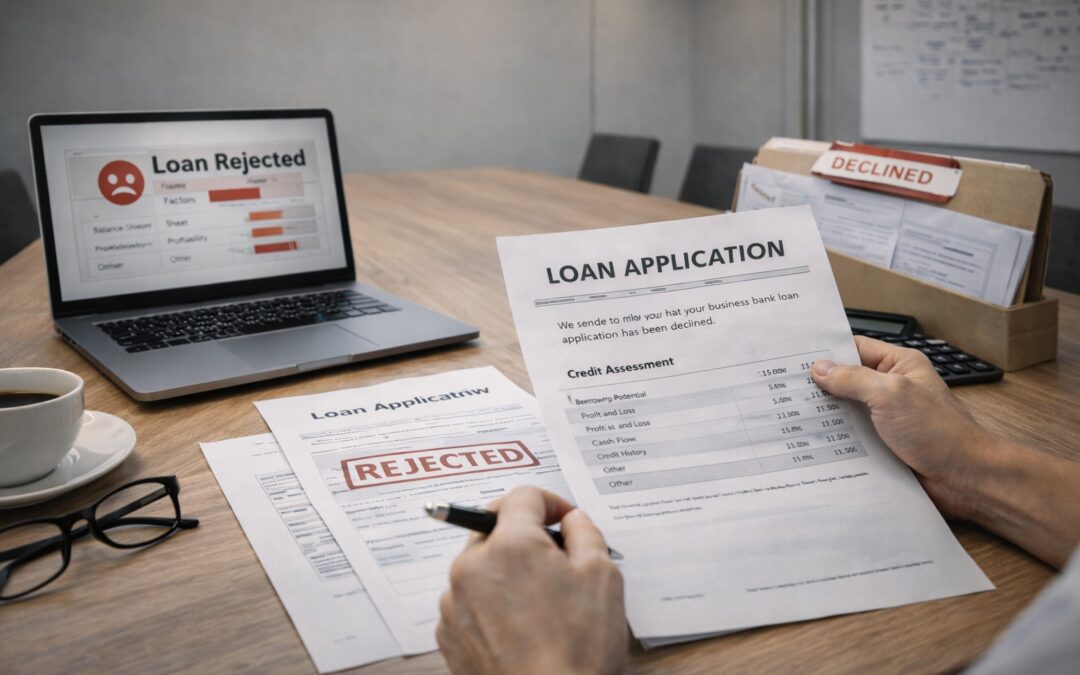
Many SME owners only discover weaknesses in their business when a bank loan application is rejected. A Bank Loan Rejection is rarely random. In most cases, it stems from financial, structural, or documentation issues that banks consistently flag during credit assessment.
Understanding these reasons early allows SMEs to fix gaps before applying again.
Understanding Bank Loan Rejection in Singapore
Banks assess SME loans conservatively. Their priority is not business potential, but repayment certainty. Even profitable businesses can face rejection if risk indicators appear too high.
Below are the most common reasons SMEs fail to qualify.
Weak Cashflow and Low Debt Servicing Ability
Banks focus heavily on cashflow, not just profit.
Common red flags:
-
Negative operating cashflow causing bank balance to trend downwards
-
Thin margins unable to absorb loan instalments
-
High existing monthly debt obligations
If cashflow cannot comfortably support repayments, rejection is likely — even if revenue looks healthy.
Poor Financial Statements or Incomplete Records
SMEs often underestimate the importance of clean financials.
Issues include:
-
Inconsistent revenue figures
-
Non-profitable business or unexplained profit swings
-
Missing financials records due to lapse in corporate governance
A Bank Loan Rejection often occurs simply because the bank cannot rely on the numbers presented.
High Existing Debt or Over-Leverage
Taking multiple loans may support growth, but excessive leverage increases risk.
Banks assess:
-
Total liabilities
-
Debt-to-equity ratio
-
Debt Service Ratio
If debt levels are already high, banks may reject new financing to avoid over-exposure.
Director’s Credit Profile Issues
For SMEs, directors often act as personal guarantors.
Problems include:
-
Past loan defaults
-
Late repayments
-
Over-utilization of personal unsecured debts
Even if the business performs well, weak director credit profiles can trigger rejection.
Short Operating History or Unstable Revenue
Newer businesses or companies with volatile income face higher scrutiny.
Banks prefer:
-
At least 2–3 years of operating history
-
Stable or growing revenue trends
Short track records make repayment risk harder to assess.
What SMEs Should Do After a Bank Loan Rejection
Instead of reapplying blindly after a bank loan rejection, SMEs should:
-
Review cashflow and debt structure
-
Clean up financial statements
-
Reduce leverage where possible
In some cases, alternative financing such as working capital loans, invoice financing, or trade financing may be more suitable than traditional bank loans.
Final Thoughts
A Bank Loan Rejection is not the end of the road — it is feedback. SMEs that understand why banks say no can restructure finances, strengthen applications, and secure funding more successfully.
If your business has faced loan rejection or wants to improve approval chances, CapitalGuru can help assess your profile and recommend the right financing strategy with clarity and confidence.