
In Part 1 of our Credit Card Debt Series, we examined what happens when you cancel a credit card and why the difference between E — Closed with No Outstanding and G — Voluntary Closure with Outstanding matters.
In Part 2, we looked at what happens when you keep the card open but make only the minimum payment. While you may technically remain current on your payments, the unpaid amount can accumulate as an interest-bearing balance, with interest making the debt progressively harder to clear.
Part 3 addresses the next question:
What can you do when substantial credit card debt has already accumulated?
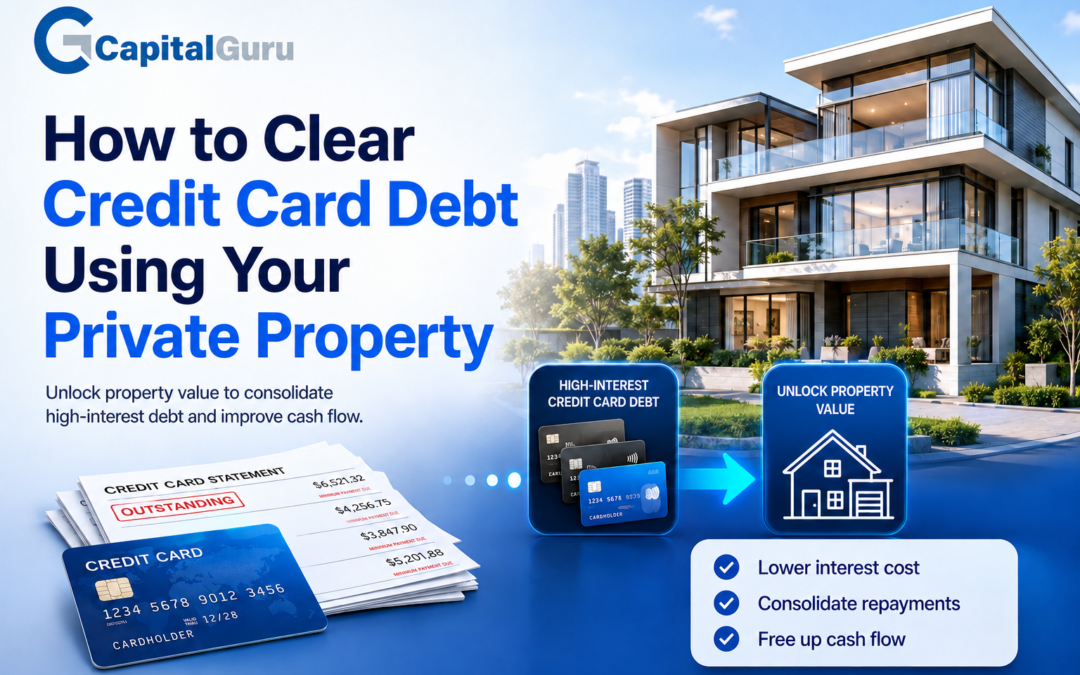
For someone who owns a private property with sufficient equity, one possible solution is to unlock part of that equity through a property cash-out or equity term loan and use the proceeds to clear expensive revolving credit card debt.
But there is one principle that must be understood from the beginning:
You are not making the debt disappear. You are refinancing it.
The Problem May Be an Asset-Liability Mismatch
Consider someone carrying the following debts:
| Credit Facility | Outstanding |
|---|---|
| Credit Card A | S$25,000 |
| Credit Card B | S$20,000 |
| Credit Card C | S$15,000 |
| Total | S$60,000 |
Even if the minimum payments are being made, the borrower is still carrying S$60,000 of high-cost revolving debt.
At the same time, this person may own a private property worth S$2 million.
The issue may therefore not be a lack of assets.
Instead, substantial wealth is locked inside an illiquid property, while expensive and highly liquid credit card liabilities continue accumulating interest.
This creates an asset-liability mismatch.
For eligible private property owners, unlocking part of the property’s equity may provide an opportunity to restructure that mismatch.
Your Private Property May Contain Usable Equity
Property equity is broadly the difference between your property’s market value and the debt secured against it.
For example:
Property value: S$2,000,000
Outstanding mortgage: S$700,000
The homeowner has substantial equity in the property.
However, this does not mean the entire S$1.3 million difference is available for borrowing.
The amount that can actually be released will depend on factors such as:
- Current property valuation
- Existing mortgage
- Applicable Loan-to-Value requirements
- Borrower’s income
- Existing debt commitments
- Total Debt Servicing Ratio
- Age and remaining loan tenure
- Credit history
- Individual lender credit policies
Where sufficient lendable equity exists and the borrower qualifies, a property-backed facility may potentially be used to clear credit card debt.
How Property Cash-Out Can Restructure Credit Card Debt
Using our earlier example, suppose the homeowner has:
Private property: S$2,000,000
Existing mortgage: S$700,000
Credit card debt: S$60,000
If the borrower qualifies for an additional S$60,000 property-backed facility, the proceeds could be used to repay the three credit cards.
Before restructuring:
S$60,000 high-cost unsecured revolving debt
After restructuring:
S$60,000 structured property-backed debt
The S$60,000 has not disappeared.
What has changed is the type, cost and repayment structure of the debt.
This is why property equity should be viewed as a debt restructuring tool, rather than free cash.
From Revolving Debt to Structured Repayment
One of the biggest problems with credit card debt is its revolving nature.
You make a payment, regain available credit, spend again and carry the remaining balance forward.
As discussed in Part 2, this can lead to an increasing interest-bearing balance even when the borrower continues making minimum payments.
A property-backed term facility generally provides a more structured repayment schedule.
The borrower’s mindset changes from:
“How much is my minimum payment this month?”
to:
“When will this debt be fully repaid?”
If the property-backed financing carries a materially lower borrowing cost than the existing credit card debt, restructuring may also significantly reduce the cost of servicing the debt.
The intended journey becomes:
High-cost revolving debt → structured repayment → declining principal → zero balance
But You Are Converting Unsecured Debt Into Secured Debt
This is the most important trade-off.
Credit card borrowing is generally unsecured debt.
A property-backed facility is secured against your property.
You are therefore exchanging expensive unsecured debt for potentially cheaper secured debt.
This may improve monthly cash flow and reduce interest costs, but the consequences of failing to repay the new facility can also be substantially more serious because a valuable asset is now supporting the borrowing.
Therefore:
Property equity should be used to restructure debt, not to create room for more debt.
A lower interest rate does not automatically make additional borrowing safe.
The Biggest Danger: Using the Credit Cards Again
This is where a sensible restructuring can go badly wrong.
Suppose S$60,000 is released from the property and all three credit cards are cleared.
The credit card balances become:
S$0
The borrower feels immediate relief.
The cards now also have available credit again.
Six months later, the borrower begins spending heavily on them.
Eventually:
Property-backed loan outstanding: S$55,000
New credit card debt: S$40,000
Instead of solving the original S$60,000 problem, the borrower now has both secured property debt and new unsecured revolving debt.
The restructuring has failed.
Clearing the cards should therefore represent a financial reset, not the restoration of spending capacity.
Refinancing Does Not Fix the Cause of the Debt
Before using property equity to clear credit card debt, there is an important question:
Why did the credit card debt accumulate in the first place?
If the debt resulted from a temporary financial event and the borrower otherwise has sustainable income, restructuring may provide a sensible way to reduce financing costs and restore cash flow.
But if the fundamental problem is:
Monthly expenditure > Monthly income
then refinancing only addresses the debt that has already accumulated.
It does not stop the next S$10,000, S$20,000 or S$60,000 from accumulating.
This connects with our earlier discussion about the difference between a financial gap and financial distress.
A financial gap may require appropriate financing.
Financial distress requires the borrower to address the underlying financial behaviour as well.
Successful restructuring therefore requires:
Restructure existing debt + correct the underlying cash-flow deficit
Will Every Private Property Owner Qualify?
No.
Owning a private property does not automatically mean a lender will approve a property cash-out facility.
The lender still needs to assess the borrower and the property.
Factors may include:
- Available property equity
- Existing mortgage
- Income and employment
- Existing financial commitments
- Credit history
- Interest-bearing unsecured debt
- LTV requirements
- TDSR requirements
- Requested loan tenure
- Individual lender policies
This creates an important timing issue.
The borrower who identifies the problem while still maintaining a good repayment record may have more restructuring options than someone who waits until payments have already become seriously delinquent.
Why Timing Matters
Across the three articles, we can see how credit card problems may progressively develop:
Full payment
↓
Minimum payment
↓
Growing interest-bearing balance
↓
Financial stress
↓
Late payment
↓
Default
The earlier the problem is identified, the greater the opportunity to take corrective action before the credit position deteriorates further.
A private property owner who notices that credit card balances are no longer coming down should therefore not focus solely on whether the minimum payments remain affordable.
The more important question is:
“Do I have a realistic plan to eliminate this debt?”
If the answer is no, it may be worth examining restructuring options before the situation becomes more serious.
Before Using Your Property to Clear Credit Card Debt
Before proceeding, consider these questions:
- How much total credit card debt do I have?
- How much interest am I currently paying?
- How much usable equity exists in my property?
- What would the new monthly repayment be?
- Can I comfortably service the property-backed facility?
- Why did my credit card debt accumulate?
- What will prevent the credit cards from accumulating balances again?
The last two questions are particularly important.
Reducing the interest rate addresses the cost of the debt.
It does not automatically address the cause of the debt.
Key Takeaways: Completing the Credit Card Debt Series
Our three-part Credit Card Debt Series follows the progression of how credit card debt should be managed before it becomes a larger financial problem.
Part 1 — What Happens to Your Credit Report When You Cancel a Credit Card?
We examined how to close a credit facility properly and why E versus G status matters.
Part 2 — What Happens When You Only Make Minimum Payment on Your Credit Card?
We explained why making minimum payments can still result in a growing interest-bearing balance and expensive revolving debt.
Part 3 — How to Clear Credit Card Debt Using Your Private Property
For eligible private property owners, property equity may potentially provide a way to restructure accumulated high-cost revolving debt into a more structured facility.
But the objective should never simply be to obtain another loan.
The intended journey is:
High-cost credit card debt → property-backed restructuring → declining principal → zero balance
Not:
Credit card debt → property cash-out → cleared cards → new credit card debt
Using property equity can potentially provide a powerful debt restructuring tool, but it also converts unsecured debt into borrowing secured against a valuable asset.
Ultimately, the success of the restructuring is not measured by how much cash is released from the property.
It is measured by whether your total debt continues to fall after the refinancing is completed.