

When SMEs apply for business financing, many focus on revenue and profitability. However, one of the most important metrics lenders assess is your Debt Servicing Ratio (DSR).
Understanding how DSR works can significantly improve your loan approval chances — and help you avoid unnecessary rejection.
What Is Debt Servicing Ratio?
DSR measures how comfortably your business income can cover existing debt obligations.
Banks generally calculate it as:
Debt Servicing Ratio = Monthly Income ÷ Total Monthly Debt Repayments
This ratio indicates how many times your income can cover your instalments. The higher the ratio, the stronger your repayment buffer.
Why Debt Servicing Ratio Matters to Lenders
Lenders are not just evaluating whether your business is profitable. They are assessing risk.
A strong DSR tells lenders that:
-
Your business generates consistent income
-
There is sufficient buffer to absorb downturns
-
Repayments will remain manageable even if revenue fluctuates
If too much of your income is committed to loan instalments, the risk profile increases — even if revenue appears healthy.
A Practical Illustration
Assume your business generates $80,000 in monthly operating income.
If total monthly debt repayments are $40,000, your income covers repayments twice over. This reflects strong repayment capacity.
However, if repayments increase to $65,000, the buffer becomes much thinner. Any temporary slowdown in sales could strain liquidity.
From a lender’s perspective, stability and resilience matter more than aggressive expansion.
Common Reasons SMEs Weaken Their Debt Servicing Ratio
Many SMEs unintentionally reduce their repayment buffer by:
-
Taking multiple short-term loans
-
Overusing hire purchase facilities
-
Expanding before stabilising cashflow
-
Layering new loans on top of existing commitments
While each loan may seem manageable individually, combined repayments can significantly reduce coverage strength.
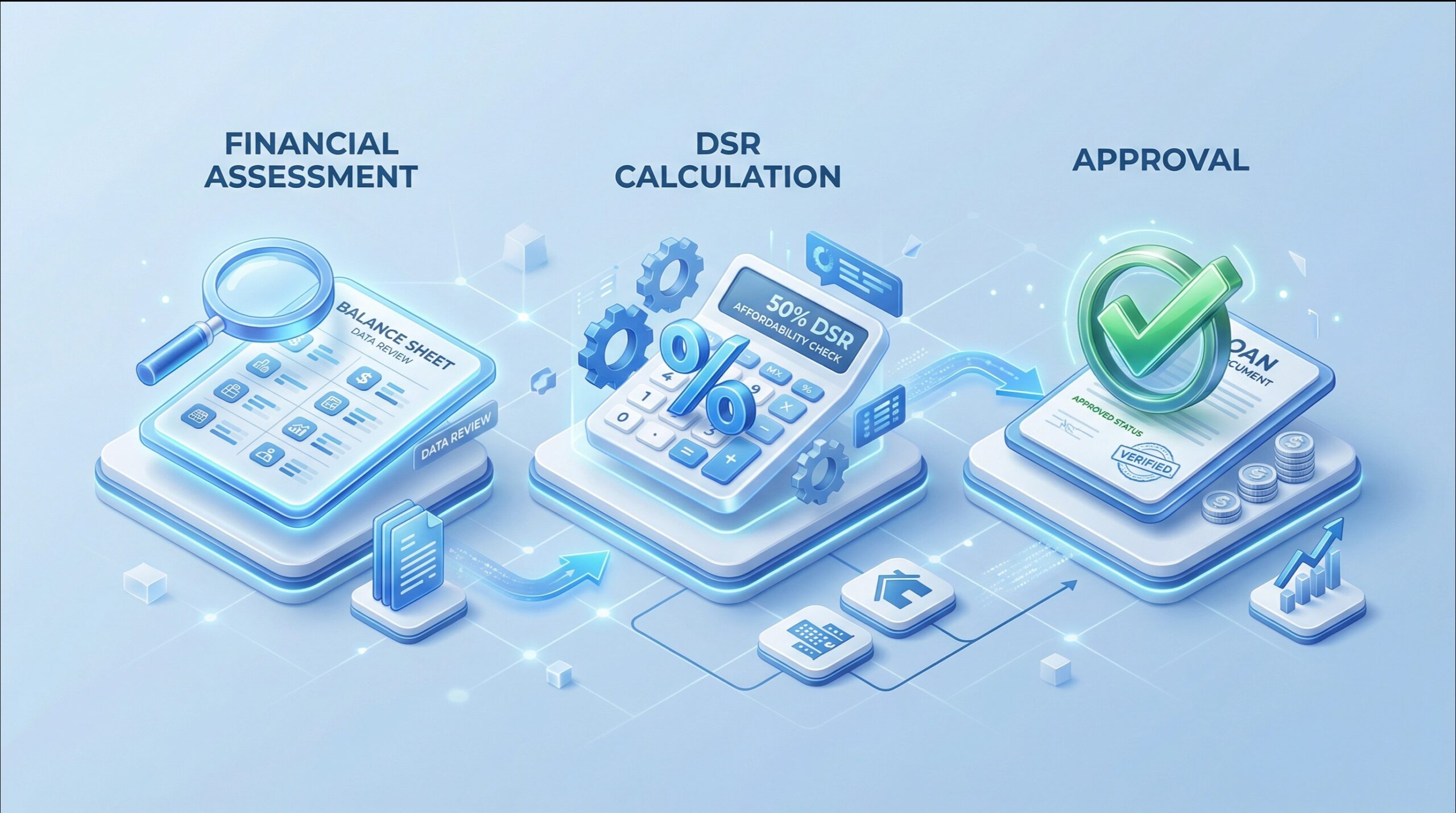
How to Strengthen Your Debt Servicing Ratio
If your Debt Servicing Ratio is tight, consider:
-
Consolidating higher-cost short-term facilities
-
Extending loan tenure to reduce monthly instalments
-
Improving recurring income streams
-
Restructuring debt instead of stacking new facilities
Often, better structuring improves approval odds more effectively than simply applying for additional funding.
Strategic Insight for SMEs
A healthy DSR does more than help you pass credit assessment. It:
-
Improves negotiation power
-
Enhances lender confidence
-
Preserves flexibility for future growth
-
Reduces financial stress during slower months
Financing should support business stability — not compress it.
Final Thoughts
Before applying for financing, SMEs should evaluate their Debt Servicing Ratio carefully and stress-test how new borrowing will impact repayment coverage.
At CapitalGuru, we review your full debt profile and structure financing strategically — helping you maintain healthy repayment buffers while securing the capital needed for sustainable growth.