
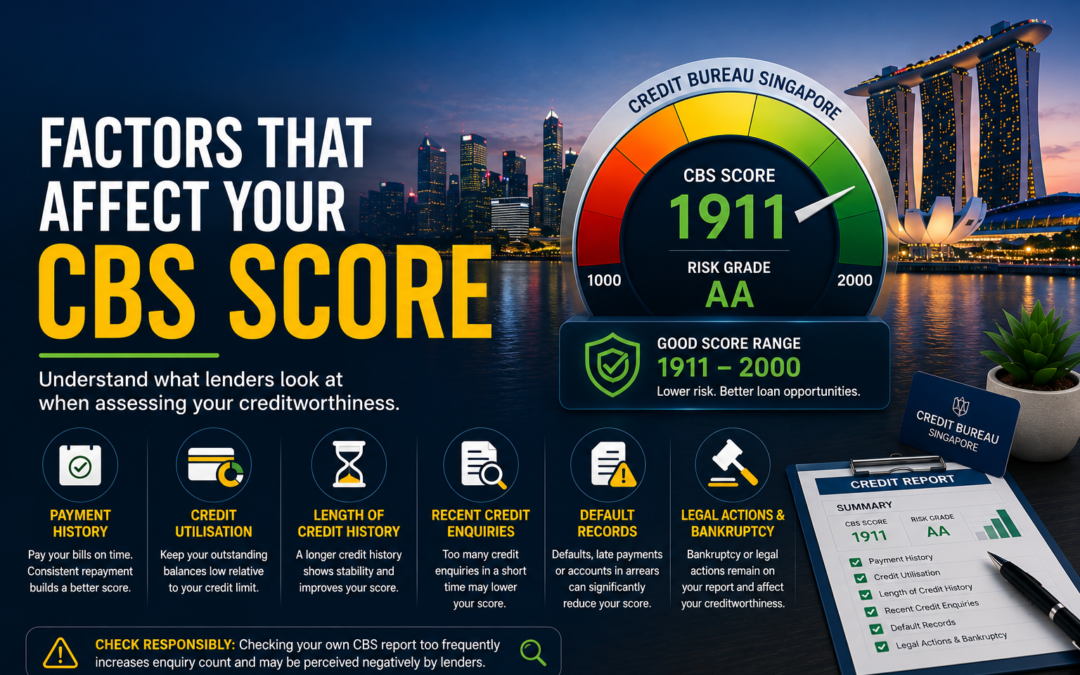
Your CBS Score is one of the most important factors lenders consider when assessing your loan or credit card application.
Whether you are applying for a mortgage, personal loan, renovation loan, business loan, or credit card, your CBS Score helps lenders evaluate your likelihood of repaying your debts on time.
Many borrowers only become aware of their CBS Score after receiving a loan rejection. Understanding the factors that affect your CBS Score can help you maintain a healthy credit profile and improve your chances of obtaining financing.
What Is a CBS Score?
A CBS Score is a numerical representation of your creditworthiness based on your credit history and repayment behaviour.
The score is generated using information contributed by banks and major financial institutions in Singapore. It helps lenders assess the probability that a borrower may default on future credit obligations.
Generally, a stronger CBS Score may result in:
- Better approval chances
- Higher credit limits
- More financing options
- Better interest rates
Conversely, a weaker credit profile may result in stricter lending criteria or financing rejection.
Payment History
Payment history is widely regarded as the single most important factor affecting your CBS Score.
Lenders want to know whether you consistently honour your repayment obligations.
Your repayment track record includes:
- Credit card repayments
- Personal loans
- Car loans
- Housing loans
- Other banking facilities
Repeated late payments can significantly affect your credit profile.
Even if the outstanding amount is eventually settled, lenders may still review your repayment conduct when assessing future applications.
How to Improve
- Pay all facilities on time.
- Set up GIRO or automatic payments.
- Avoid relying solely on minimum payments.
Credit Utilisation Ratio
Your credit utilisation ratio measures how much of your available revolving credit you are using.
For example:
- Credit card limit: $20,000
- Outstanding balance: $15,000
Your utilisation ratio is 75%.
High utilisation may signal financial stress even when repayments are made on time.
Many lenders prefer to see borrowers maintaining reasonable utilisation levels rather than consistently operating near their credit limits.
How to Improve
- Keep balances low relative to limits.
- Avoid maxing out credit cards.
- Pay down outstanding balances regularly.
Number of Credit Applications
Every time you apply for a loan or credit facility, a lender enquiry is recorded.
Examples include:
- Credit cards
- Personal loans
- Renovation loans
- Car loans
- Housing loans
Submitting multiple applications within a short period can negatively impact how lenders assess your risk profile.
From a lender’s perspective, numerous applications may indicate:
- Financial distress
- Urgent funding needs
- Previous loan rejections
- Credit-seeking behaviour
This is one of the most common mistakes borrowers make when attempting to improve approval odds.
How to Improve
- Avoid applying to multiple banks simultaneously.
- Understand lender requirements before applying.
- Work with an experienced financing consultant who can identify suitable lenders.
Length of Credit History
Your credit history provides lenders with a longer-term view of your borrowing behaviour.
Individuals who have demonstrated responsible credit management over many years are often viewed more favourably than those with limited credit records.
A long and positive credit history helps lenders gain confidence in your ability to manage future obligations.
How to Improve
- Maintain older accounts in good standing.
- Avoid closing long-established facilities unnecessarily.
- Build credit gradually over time.
Credit Mix
Lenders also consider the variety of credit facilities you have successfully managed.
Examples include:
- Credit cards
- Housing loans
- Car loans
- Personal loans
A borrower who has demonstrated responsible management across different types of facilities may present lower risk than someone with very limited credit exposure.
However, this does not mean you should take on unnecessary debt simply to improve your credit profile.
Defaults and Delinquencies
Defaults are among the most damaging events affecting a CBS Score.
Examples include:
- Unpaid credit card balances
- Serious repayment arrears
- Unresolved loan obligations
Defaults indicate a significantly higher level of credit risk and can affect financing approvals for years.
How to Improve
- Address overdue accounts immediately.
- Negotiate repayment arrangements where necessary.
- Avoid ignoring lender communications.
Bankruptcy and Debt Management Records
Major adverse credit events may have a lasting impact on your credit profile.
Examples include:
- Bankruptcy
- Debt Management Program participation
- Debt restructuring arrangements
- Legal debt recovery actions
Even after these matters are resolved, lenders may continue to review them when assessing future applications.
Why Some Borrowers Have a GX / CX Credit Grade
A common misconception is that having no debt automatically means having an excellent CBS Score.
In reality, individuals with little or no borrowing history may receive a GX credit grade.
GX generally means there is insufficient credit information available for meaningful assessment.
This commonly affects:
- Young adults who have never used credit
- Individuals who avoid borrowing entirely
- Recently discharged bankrupts rebuilding their credit profile
Without repayment history, lenders have limited information to evaluate creditworthiness.
What About Checking Your Own CBS Report?
Many borrowers believe that checking their own CBS report frequently is harmless.
While self-enquiries may not affect your CBS Score in the same way as credit applications, borrowers should avoid becoming overly fixated on repeatedly purchasing their CBS reports within short intervals.
From a practical lending perspective, some credit officers may view excessive self-enquiries as a behavioural indicator warranting further review.
Questions that may arise include:
- Is the borrower preparing for multiple applications?
- Has the borrower recently been rejected?
- Is there concern about deteriorating credit standing?
- Is the borrower facing financial stress?
The greater concern remains multiple loan applications submitted across different lenders. However, borrowers should adopt a measured and disciplined approach to monitoring their credit profile.
Best Practice
Consider reviewing your CBS report:
- Before a major financing application
- After settling significant debts
- If you suspect inaccuracies in your report
Good borrowers rarely obsess over their CBS Score.
Instead, they focus on the behaviours that improve it.
How to Improve Your CBS Score
Pay On Time
Consistent repayment behaviour remains the most effective way to build a strong credit profile.
Keep Credit Utilisation Low
Avoid carrying excessive balances relative to your available credit limits.
Avoid Excessive Applications
Apply only when necessary and avoid submitting applications to multiple lenders simultaneously.
Build Credit Gradually
Responsible use of credit over time is one of the strongest indicators of creditworthiness.
Maintain Financial Discipline
Strong credit profiles are built through long-term habits rather than short-term actions.
Final Thoughts
Your CBS Score is not determined by a single factor.
Instead, it reflects your overall borrowing behaviour, including repayment history, credit utilisation, credit history length, application activity, and adverse credit events.
The good news is that credit scores are dynamic.
By maintaining good repayment habits, avoiding unnecessary credit applications, and demonstrating financial discipline over time, you can gradually strengthen your CBS Score and improve your chances of obtaining financing in the future.
Ultimately, lenders are not looking for perfect borrowers. They are looking for borrowers who demonstrate responsibility, consistency, and reliability over time.