
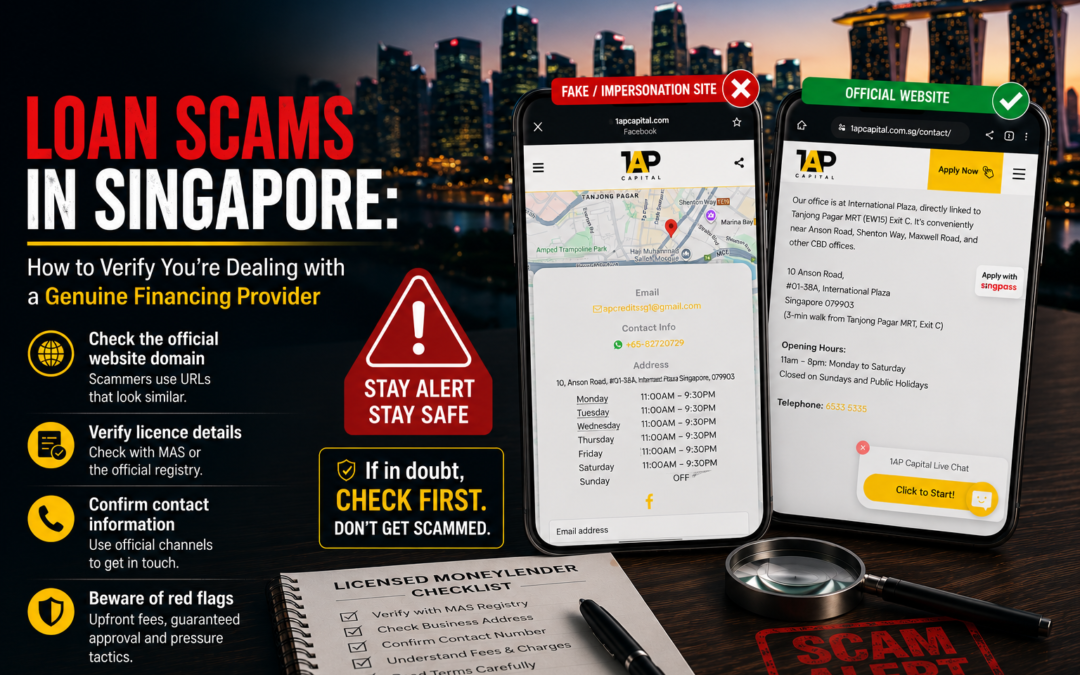
Gone are the days when loan scams were limited to suspicious SMS messages and unsolicited phone calls. Today, scammers can create professional-looking websites, social media advertisements, and online profiles that closely resemble legitimate financing providers.
For consumers and SME owners seeking financing, knowing how to identify warning signs and verify a financing provider has become more important than ever.
Why Loan Scams Continue to Succeed
Many victims of loan scams are not careless or inexperienced.
In fact, scammers often target individuals who are:
- Urgently seeking financing
- Facing cashflow challenges
- Looking for fast approvals
- Unfamiliar with financing regulations
Scammers understand that when people are under financial pressure, they may focus on obtaining funding quickly rather than verifying who they are dealing with.
By creating a sense of urgency and legitimacy, fraudsters can convince victims to disclose sensitive personal information or make upfront payments.
How Modern Loan Scams Operate
Today’s loan scams can be highly convincing.
Common tactics include:
Fake Websites
Scammers may create websites that appear professional and credible.
These websites often contain:
- Business addresses
- Contact numbers
- Loan application forms
- Customer testimonials
- Professional branding
At first glance, many consumers may struggle to distinguish these websites from genuine financing providers.
Social Media Advertisements
Many consumers discover financing options through social media platforms.
Scammers exploit this by running advertisements that promote:
- Easy loan approvals
- Guaranteed financing
- Low interest rates
- Fast cash disbursement
The advertisement may direct users to websites, WhatsApp numbers, or online forms designed to collect personal information.
Impersonation of Legitimate Businesses
One particularly concerning form of loan scam involves the misuse of information belonging to legitimate businesses.
Scammers may:
- Use a genuine business address
- Reference a legitimate company name
- Display misleading licence information
- Present themselves as representatives of a legitimate financing provider
The objective is to create the appearance of legitimacy and gain the victim’s trust.
Red Flags That May Indicate a Loan Scam
While not every warning sign automatically indicates fraud, consumers should exercise caution when they encounter any of the following:
Contact Details Do Not Match Official Sources
One of the simplest checks is to verify contact information.
Ask yourself:
- Does the phone number match the company’s official website?
- Is the WhatsApp number listed on official business records?
- Does the email address use the company’s official domain?
Discrepancies between advertised contact details and official contact details should always be investigated.
Requests for Upfront Payments
One of the most common characteristics of loan scams is the request for money before the loan is disbursed.
Scammers may claim the payment is required for:
- Processing fees
- Administrative charges
- Security deposits
- Insurance premiums
- Legal costs
Consumers should be extremely cautious whenever payment is requested before receiving financing.
Pressure to Act Immediately
Scammers frequently create urgency.
Examples include:
- “Limited-time approval”
- “Funds available today only”
- “Immediate action required”
Legitimate financing providers generally allow applicants sufficient time to review terms and make informed decisions.
Communication Through Unofficial Channels
Be cautious if all communication takes place exclusively through:
- Personal mobile numbers
- WhatsApp accounts
- Social media messaging platforms
Always verify that the person you are communicating with is authorised to represent the company.
How to Verify a Genuine Financing Provider
Verify the Company’s Official Contact Information
Before submitting any application, verify:
- Official website
- Office address
- Telephone number
- Email address
Cross-check information across multiple sources.
If different contact details appear across different platforms, seek clarification before proceeding.
Speak Directly with the Company
Whenever possible, contact the company using its published office number.
Do not rely solely on the contact number provided in an advertisement or social media post.
A simple phone call can often reveal whether the person you are communicating with is genuinely authorised.
Verify Business Registration Details
Consumers can verify basic company information through publicly available records.
Checks may include:
- Company name
- UEN
- Registered address
- Business activities
Any inconsistencies should be treated as warning signs.
Understand Who Is Providing the Financing
One of the most overlooked questions is:
“Who is actually providing the loan?”
Consumers should clearly understand whether they are dealing with:
- A bank
- A licensed financing provider
- A broker
- A consultant
- A referral platform
Understanding the role of each party helps reduce the risk of misunderstanding and deception.
Why SME Owners Should Be Particularly Careful
SME owners often provide extensive information when applying for financing.
This may include:
- NRIC details
- Financial statements
- Bank statements
- Company information
- Tax records
- Business contracts
In the wrong hands, this information can be extremely valuable.
Beyond financial loss, businesses may face:
- Identity theft
- Data breaches
- Fraudulent applications
- Reputational damage
This is why proper verification should always take place before any documents are submitted.
If Something Feels Wrong, Pause
One of the best protections against loan scams is simply taking a step back.
Before providing information or making payments, ask:
- Have I verified the company?
- Do the contact details match?
- Have I spoken to an authorised representative?
- Am I being pressured to act quickly?
- Do I fully understand who I am dealing with?
If the answer to any of these questions is unclear, further verification is warranted.
Final Thoughts
Loan scams have become increasingly sophisticated, making it more difficult for consumers to distinguish legitimate financing providers from fraudsters.
While scammers continue to evolve their methods, the principles of verification remain unchanged.
Always verify the company.
Always verify the contact details.
Always understand who you are dealing with.
A few minutes spent verifying a financing provider today could prevent significant financial and personal losses tomorrow.
When it comes to financing, trust should never be assumed. It should always be verified.