

Property financing can become especially challenging when time is running out.
In this case, Company A was referred to CapitalGuru with its OTP expiring in just 3 days.
The Option to Purchase had already been extended once, and the case had previously gone through two other brokers who were unable to secure the required financing approval.
The company was acquiring a rare B2 industrial unit in the Ubi area for approximately S$2 million, with approved 24-pax non-ancillary dormitory beds.
On paper, the property was attractive.
The financing, however, was anything but straightforward.
CapitalGuru had to manage three challenges at the same time:
- An OTP expiring in 3 days
- A financing case that had already been unsuccessful through two other brokers
- Financial statements showing substantial related-party transactions that required explanation and mitigation
Despite the short timeline and complexity, CapitalGuru successfully secured 90% loan-to-valuation financing from not one, but two banks, while also arranging short-term bridging finance to help complete the purchase.
The Property Opportunity
The subject property was a B2 industrial unit located in Ubi.
What made the property particularly interesting was the presence of approved 24-pax non-ancillary dormitory beds.
Industrial properties with such approved usage are relatively uncommon, making the unit potentially valuable from both an operational and investment perspective.
The agreed purchase price was approximately S$2 million.
However, having an attractive property does not automatically mean financing will be easy.
Banks still have to assess the borrower, the financial statements, the property, the transaction structure and the overall repayment ability.
That was where the real challenge began.
Challenge 1: OTP Expiring in Just 3 Days
The first problem was time.
By the time Company A was referred to CapitalGuru, the OTP was expiring in only 3 days.
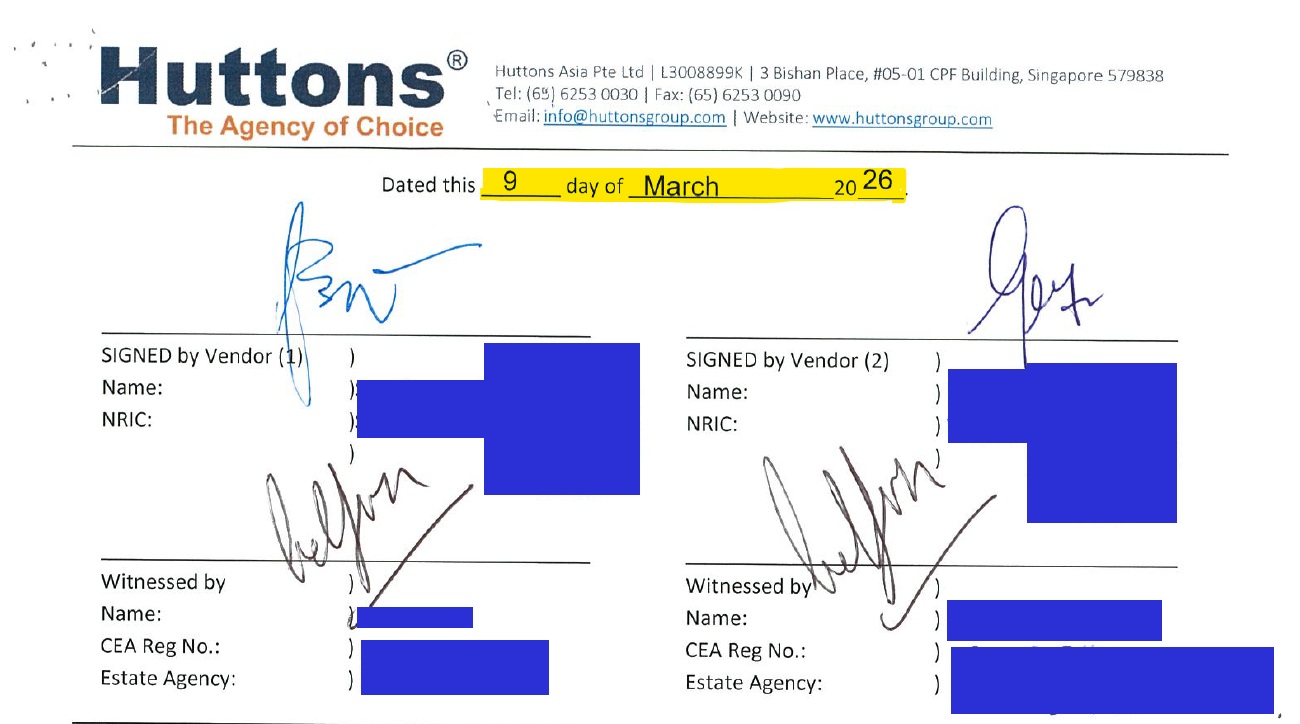
The OTP had already been extended once.
That meant there was very limited room for further delay.
If financing could not be secured quickly enough, Company A risked losing the opportunity to purchase the property and potentially losing monies already committed to the transaction.
This was not a situation where the borrower could simply submit applications to multiple banks and wait several weeks for responses.
The case needed to be understood, packaged and escalated quickly.
Speed was important, but speed without proper structuring would not solve the problem.
Challenge 2: Two Previous Brokers Had Been Unable to Secure Approval
Before approaching CapitalGuru, Company A had already worked with two other brokers.
Neither was able to secure the required approval.
This immediately raised an important question:
Was the case fundamentally unfinanceable, or had the issues not been properly addressed?
This distinction matters.
When a financing case is rejected, the solution is not always to simply send the same documents to another lender.
Sometimes the borrower profile needs to be better understood.
Sometimes the transaction needs to be structured differently.
And sometimes the bank needs proper explanations around items that may otherwise appear as credit concerns.
CapitalGuru therefore approached the case by first understanding why the previous attempts had not worked.
Challenge 3: Significant Related-Party Transactions
One of the major issues was the company’s financial statements.
They showed substantial related-party transactions, which was covered as a red flag in our earlier article.
Related-party transactions are not necessarily negative.
Businesses may have legitimate transactions between related companies due to shared operations, common directors, shareholder funding, intercompany purchases, management charges or temporary cashflow support.
However, banks will usually want to understand these transactions.
Questions may include:
- Why are funds moving between related companies?
- Are these transactions recurring?
- Are they operational or financing-related?
- Are there amounts due to or from directors?
- Is the borrower financially dependent on another related company?
- Do the transactions distort the company’s reported profitability or cashflow?
If these questions are not properly addressed, the transactions can create uncertainty for the lender.
For Company A, this meant that simply submitting the financial statements was not enough.
The related-party transactions had to be explained, contextualised and mitigated.
The CapitalGuru Approach
CapitalGuru coordinated closely with Company A to understand the nature of the related-party transactions and the broader financial position of the business.
Instead of treating the financial statements as a set of standalone numbers, the case was presented together with the commercial explanation behind those numbers.
This allowed the lenders to assess the transaction with better context.
At the same time, CapitalGuru worked with the banks to address the property financing requirement under the extremely tight deadline.
The objective was not merely to obtain any approval.
The objective was to achieve a financing structure that would allow Company A to complete the purchase with sufficient certainty.
The Outcome: 90% Loan-to-Valuation From Two Banks
Despite the earlier unsuccessful attempts, CapitalGuru successfully secured financing approval at 90% loan-to-valuation.
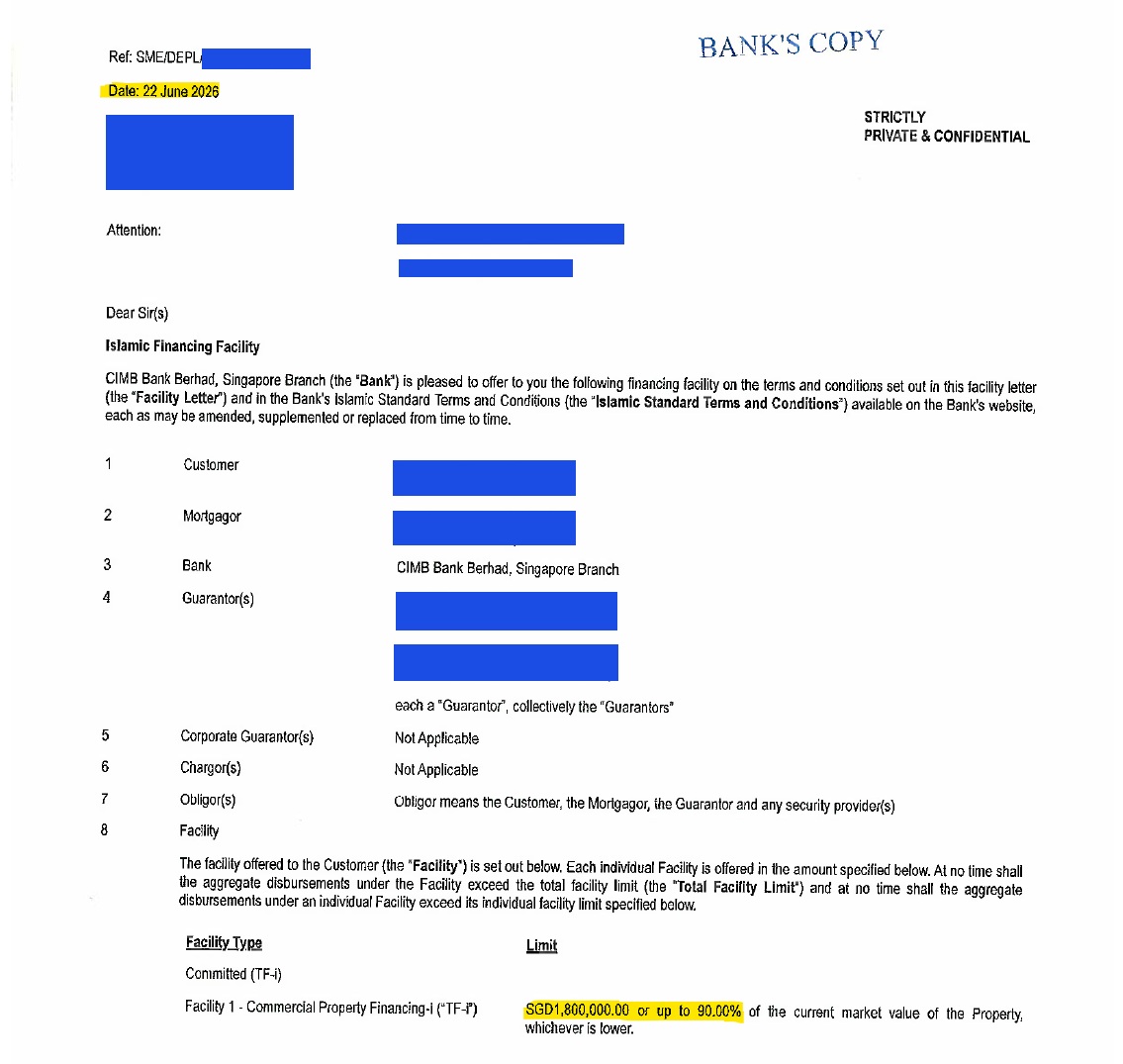
More importantly, approval was secured from two separate banks.
This gave Company A greater certainty and optionality.
A second approval can be especially valuable in a time-sensitive transaction because it reduces the risk of relying entirely on one lender.
It also provides the borrower with an alternative if there are changes to conditions, documentation requirements or completion timelines.
For a S$2 million industrial property, achieving 90% loan-to-valuation represented a significant financing outcome.
But the property loan was only part of the solution.
The Remaining Challenge: Downpayment, GST and Stamp Duties
Even with a high property loan quantum, a purchase still requires additional cash.
Company A needed to meet obligations including:
- Remaining downpayment
- GST
- Buyer’s Stamp Duty and other applicable duties
- Transaction-related costs
The company therefore required additional short-term liquidity to complete the purchase.
This is an important point in property financing.
A borrower can sometimes secure the property loan and still face a cashflow gap at completion.
The financing plan therefore has to consider the entire acquisition, not just the bank’s property loan.
Bridging Finance Completed the Structure
To address the remaining funding gap, CapitalGuru also successfully arranged a short-term bridging loan for Company A.
The bridging facility helped the company meet the other financial obligations required to complete the property purchase.
This meant the final financing solution was not simply:
Property loan approved.
It was a combination of:
High-leverage property financing + short-term bridging finance + transaction coordination
That broader structuring was what allowed the purchase to proceed.
The Lesson: Complex Cases Need More Than Another Application
This case highlights an important principle in financing.
When a case has already been unsuccessful, sending the same information to another lender does not necessarily produce a different outcome.
Complex transactions may require:
- Understanding the lender’s concerns
- Explaining unusual financial items
- Structuring the request appropriately
- Coordinating timelines carefully
- Finding complementary financing where necessary
The OTP expiring in 3 days created urgency.
But urgency alone was not the problem.
The real challenge was combining speed with proper credit presentation and financing structure.
The CapitalGuru View
Property financing is not always about finding the lowest interest rate or simply submitting an application to a bank.
Sometimes the real value lies in understanding:
What is preventing approval?
What does the bank need to be comfortable?
How should the financial information be explained?
And how can the entire transaction be funded within the required timeline?
In this case, the borrower came to CapitalGuru after two previous attempts had been unsuccessful and with the OTP expiring in just 3 days.
Through coordination, mitigation and proper structuring, CapitalGuru secured:
90% loan-to-valuation financing
Two separate bank approvals
Short-term bridging finance
A complete funding solution for the property purchase
The outcome demonstrates an important principle:
Complex financing cases are not always solved by finding another lender. Sometimes the difference lies in how the case is understood, structured and presented.
Case details have been generalised to protect client confidentiality. Financing approvals, loan-to-value ratios and bridging facilities are subject to lender assessment, property type, borrower profile and prevailing lending criteria. Past outcomes do not guarantee future approvals.