
For many Singapore Car and Bike Dealers, managing cash flow is one of the biggest challenges to business growth. While making sales is important, waiting months or even years to collect instalments from customers can strain working capital and limit expansion opportunities. This is where block discounting can be a valuable financing solution.
A Block Discounting Line allows businesses to unlock cash tied up in hire purchase agreements or installment receivables. Instead of waiting for customers to make monthly payments over an extended period, businesses can receive funding upfront and use the capital to grow their operations.
In this guide, we’ll explain what block discounting is, how it works, and how Car and Bike Dealers can benefit from it.
What Is Block Discounting?
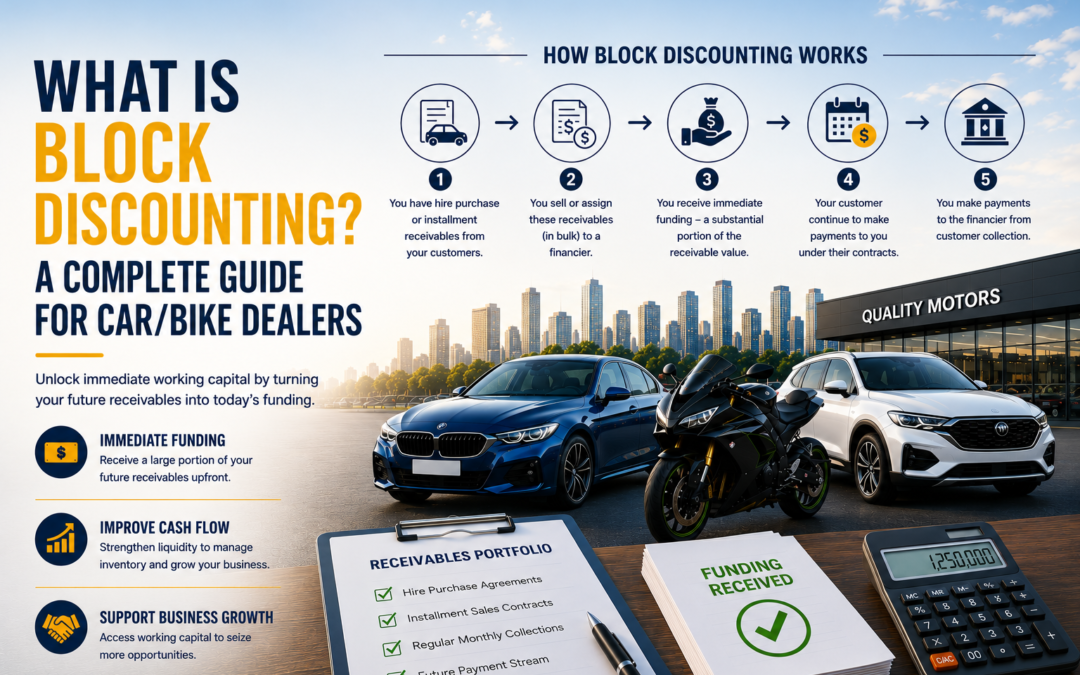
Block discounting is a financing arrangement where a business sells or assigns its future instalment receivables to a financier in exchange for immediate funding.
These receivables typically arise from hire purchase agreements or installment sales. Rather than collecting monthly payments over several years, the business receives up to 90% of the Hirepurchase receivables upfront.
The business then make monthly payments from clients’ monthly instalments back to the financier at a lower interest rate than in-house financing, allowing them to still an interest spread while releasing working capital.
Block discounting is commonly used by car and bike dealers that regularly provide in-house financing to their customers and need access to working capital to support ongoing operations.
Learn how a Block Discounting Line works differently from a Floor Stock Financing Line here.
How Does Block Discounting Work?
To understand block discounting, consider the example of a motorcycle dealer.
The dealer sells a motorcycle worth S$20,000 to a customer under a hire purchase arrangement. Instead of receiving the full payment immediately, the customer agrees to pay monthly installments over five years.
While the dealer has successfully made a sale, the cash will only be received gradually over the repayment period, while supplier payment for the motorcycle has to be paid in full within 30 – 60 days.
With a block discounting facility, the dealer can assign the hire purchase contract to a financier. The financier reviews the agreement and advances a large percentage of the outstanding receivable value.
The dealer receives cash upfront and can use the funds to purchase additional inventory, pay suppliers, or expand the business.
This allows the dealer to convert future income into immediate working capital.
Benefits of Block Discounting
Improved Cash Flow
One of the main advantages of block discounting is improved liquidity.
Businesses no longer need to wait for customers to complete their installment payments before accessing the value of the sale. Immediate funding helps maintain healthy cash flow and supports daily operations.
Faster Business Growth
Access to upfront capital enables businesses to reinvest quickly.
Instead of having funds tied up in receivables, companies can purchase additional stock, take on more customers, or invest in expansion opportunities.
Better Working Capital Management
Block discounting helps bridge the gap between making a sale and receiving payment.
This can be especially useful for businesses with significant financing portfolios and ongoing inventory requirements.
Scalable Financing
As a business generates more hire purchase contracts or installment receivables, the amount available for block discounting may also increase.
This makes block discounting a scalable financing solution that grows alongside the business.
Who Can Benefit from Block Discounting?
Block discounting is commonly used by:
- Motorcycle dealers
- Motor vehicle dealers
- Commercial vehicle dealers
- Businesses offering installment payment plans
- Hire purchase financing companies
Any business that generates a consistent stream of receivables from financed sales may potentially benefit from a block discounting facility.
Block Discounting vs Traditional Business Loans
Although both solutions provide funding, they operate differently.
A traditional business loan is typically assessed based on the company’s financial performance, profitability, and credit profile.
Block discounting, on the other hand, is primarily based on the quality and value of the receivables being assigned.
This means businesses with strong receivables portfolios may be able to access funding even if they wish to preserve their existing working capital facilities.
Additionally, block discounting often aligns funding availability with sales activity, making it a flexible financing option for growing businesses.
Key Requirements for Approval
While requirements vary among financiers, businesses seeking block discounting typically need:
- A proven operating track record
- Valid hire purchase or installment agreements
- Proper receivables documentation
- Good collection history
- Sound financial management
- Stable business operations
Financiers will usually assess the quality of the receivables portfolio and the likelihood of continued customer repayments before approving a facility.
Potential Risks to Consider
Like any financing solution, block discounting comes with certain considerations.
Customer Default Risk
If customers fail to make payments, there may be financial implications depending on the financing structure and agreement terms.
Concentration Risk
Businesses that rely heavily on a small number of customers may face greater risk if one or more customers default.
Financing Costs
The cost of funding should always be weighed against the benefits of improved cash flow and business growth.
Documentation Requirements
Proper record-keeping and contract management are essential to ensure smooth financing approval and ongoing compliance.
Is Block Discounting Right for Your Business?
For businesses that regularly generate receivables through hire purchase or installment sales, block discounting can be an effective way to improve cash flow and unlock growth opportunities.
Instead of waiting years to collect payments, businesses can access funding immediately and reinvest in operations, inventory, and expansion.
By converting future receivables into working capital today, block discounting helps businesses maintain liquidity while supporting long-term growth objectives.
Explore Block Discounting Solutions with CapitalGuru
At CapitalGuru, we help Singapore SMEs explore financing solutions tailored to their business needs. Whether you’re looking for Block Discounting, Working Capital Loans, Trade Financing, Invoice Financing, or Hire Purchase Facilities, our team can help you identify suitable funding options from multiple financing partners.
Contact CapitalGuru today to learn how block discounting can help strengthen your cash flow and support your business growth.